Rebuilding the operating system of a school
Ed Tech, AI, product leadership, design systemHead of Experience
2022-Current
REPORTING TOsystemsCEO
SIS, LMS, HRIS, ERP
TIMELINEROLEGlobal reach, outgrown infrastructure
The ChallengeThink Tank Training Centre, the #1 ranked game design school in North America, was founded in 2005 as a campus-only school. It began delivering online programs just ahead of COVID, a move that positioned it well to build a student community across the globe. But going online produced two disjointed operating systems rather than one, with no shared source of truth for student progress, no unified view of faculty across campus and online, and a learning experience that varied depending on which system a student happened to be routed through. That inconsistency wasn't just an operations problem, it was putting student outcomes at risk, right as the school was beginning to expand as a global community.
The challenge was twofold: fix this for Think Tank, and build it in a way robust enough that it could eventually be licensed to other colleges facing the same problem.
My dual mandate:
#1
Fix it for Think TankUntangle the operational chaos across campus and online, one connected system built for a single school's real needs.
#2
Build it to scale beyond one schoolDesign the platform to be licensed and run by other similar educational institutions as a SaaS.
My roleFrom vision to execution
I led the redesign of PORTL, Think Tank's legacy LMS built in-house, reporting directly to the CEO. With a small cross-functional team, I owned the parts of the work that needed a single point of continuity, strategy, data architecture, and delivery, so the platform stayed coherent as it moved from concept to build.
the process01Mapped the friction, department by department.
Before designing anything, I built service blueprints and journey maps for students and faculty, tracing where campus and online operations diverged, and where workflows broke down between systems.
02Defined scope through jobs to be done.
Rather than scoping by feature request, I grounded the requirements in what students, faculty, and administrators were actually trying to accomplish.
03Researched what's out there to find what wasn't.
I researched current ed-tech practices and learning models to inform the platform's direction, shaping a learner journey built around active and experiential learning rather than passive content delivery.
04Reconciled systems that held conflicting data
Student and faculty data, as well as curriculum lived across three disconnected tools, each with its own version of the truth. I worked to restructure and centralize this while making sure that it met regulatory compliance requirements.
05Gave it a design system to grow into
I designed the UI myself, building a robust design system in Figma. PORTL wasn't a simple app, it spanned an SIS, an HRIS, and a curriculum engine, each with different UI needs, from data-dense admin views to learner-facing content to faculty tools, a range a generic component library or off-the-shelf UI kit wouldn't have covered well.
Explored AI with intention, not for its own sake.
THE JUDGMENT CALLAs AI tools entered the mainstream, we evaluated several ideas for where it could genuinely help, personalizing the experience and easing manual work, for administrators, learners, and course creators. Some of those ideas turned out to be better solved with simpler, rules-based logic, and we were deliberate about not reaching for AI where it wasn't the right tool. The technology was evolving quickly, and we didn't want to over-invest in a build that could be outdated within months.
Innovation the school could run with
The outcomePORTL 2.0 gave Think Tank an innovative platform built around the people who actually used it, a more consistent, connected experience for students, a system administrators could run with confidence, and one shared source of truth for faculty across campus and online. It was a project I was genuinely proud of, ambitious in scope and built with real care, and handing it off to go on parental leave, with that foundation in place and a clear set of directions for where AI could add real value next, wasn't easy. But I left knowing the team carrying it forward had something solid to build on.
A promotional video of PORTL, created to showcase at SIGGRAPH and serve as a marketing asset for Think Tank, as the platform became a key market differentiator for the institution.
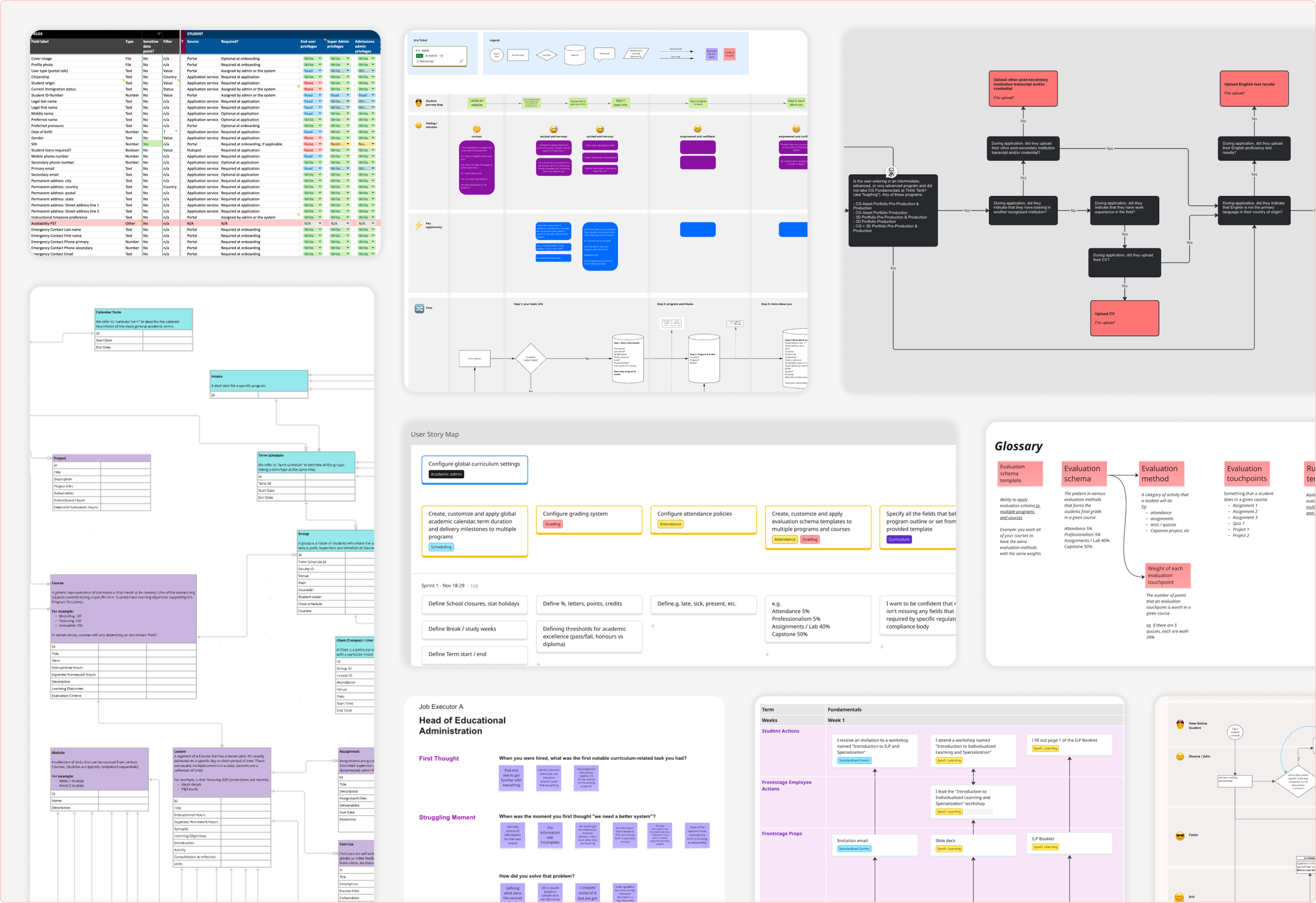
A few of the artifacts that shaped the platform along the way: service blueprints mapping operations across departments, user interviews surfacing real friction points, an ERD reconciling data across three legacy systems, journey maps tracing the student and faculty experience, user stories translating research into requirements, flow charts documenting system logic, and more.
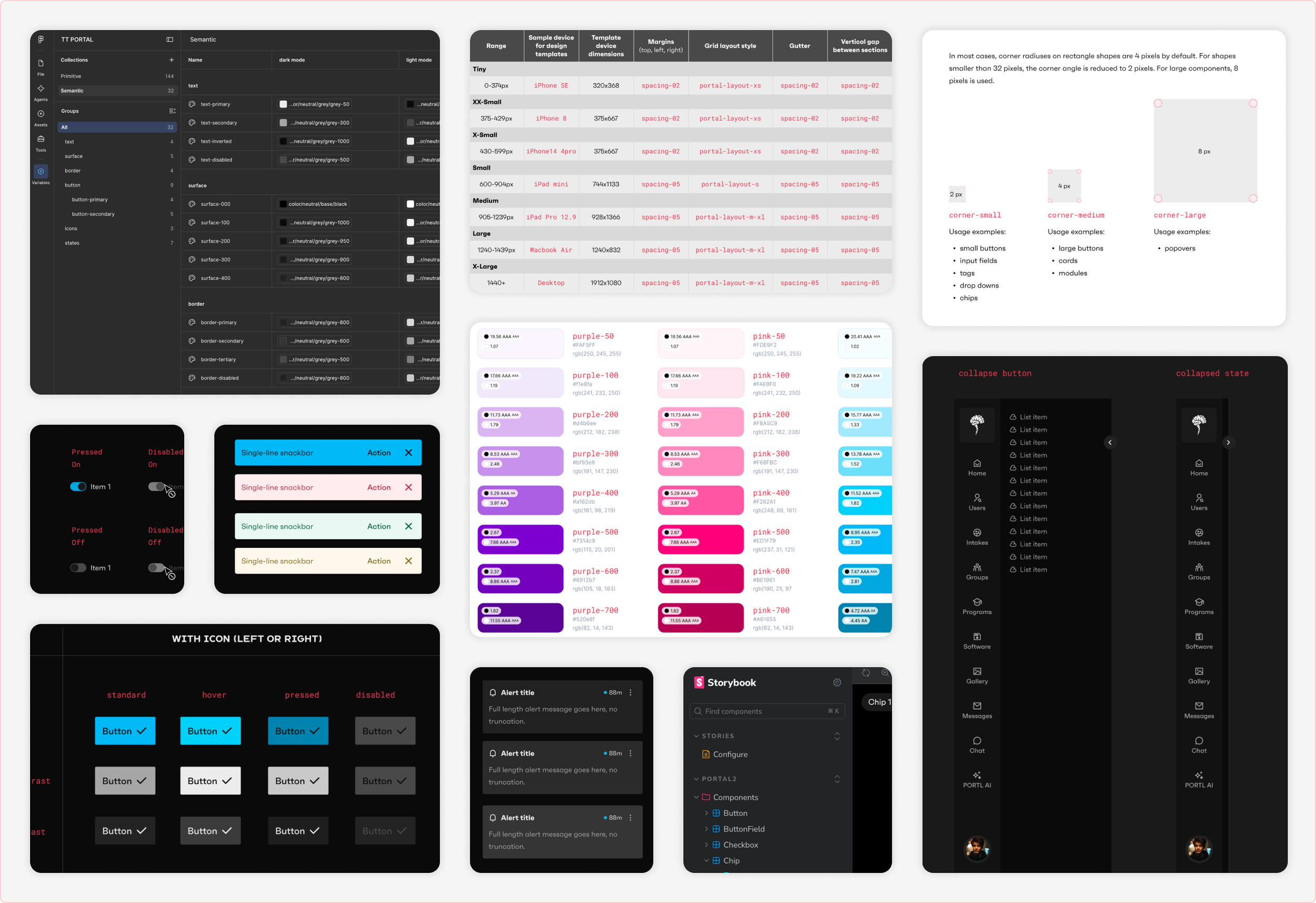
The design system was architected for scaling and customization as a SaaS product. Figma's newly released token functionality made building from scratch the right call at the time, though we borrowed select rules from Google's Material Design to save time where reinventing the wheel wasn't necessary. Coded components lived in Storybook, giving engineering and design a shared source of truth, each component documented, testable in isolation, and easy to reference without digging through the codebase.
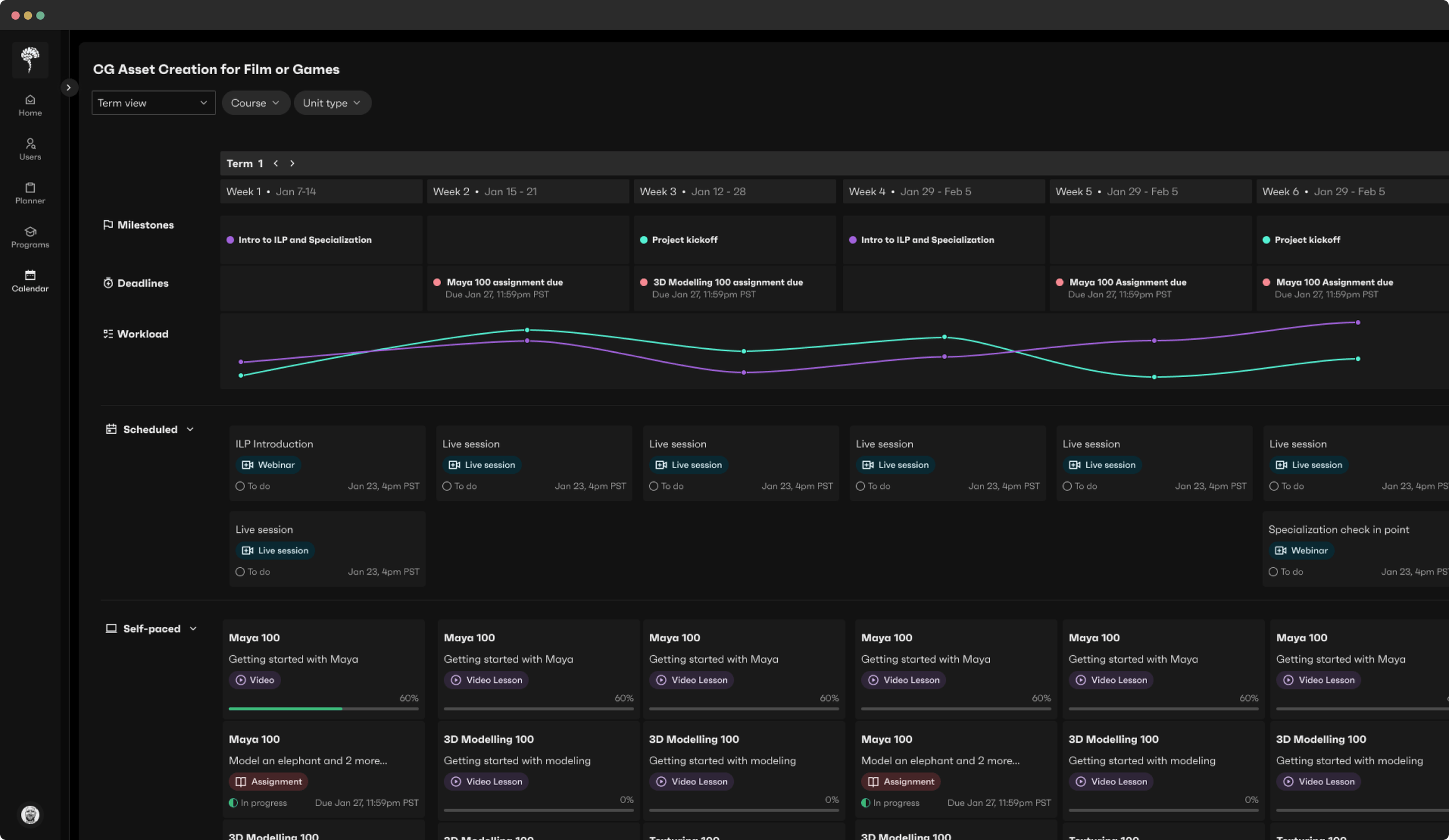
Our research found that students had no effective bird's-eye view of the program, and that no learning platforms on the market visualized curriculum as a journey for the learner. So we designed a key screen letting students view their curriculum and milestones by week, term, or full program.
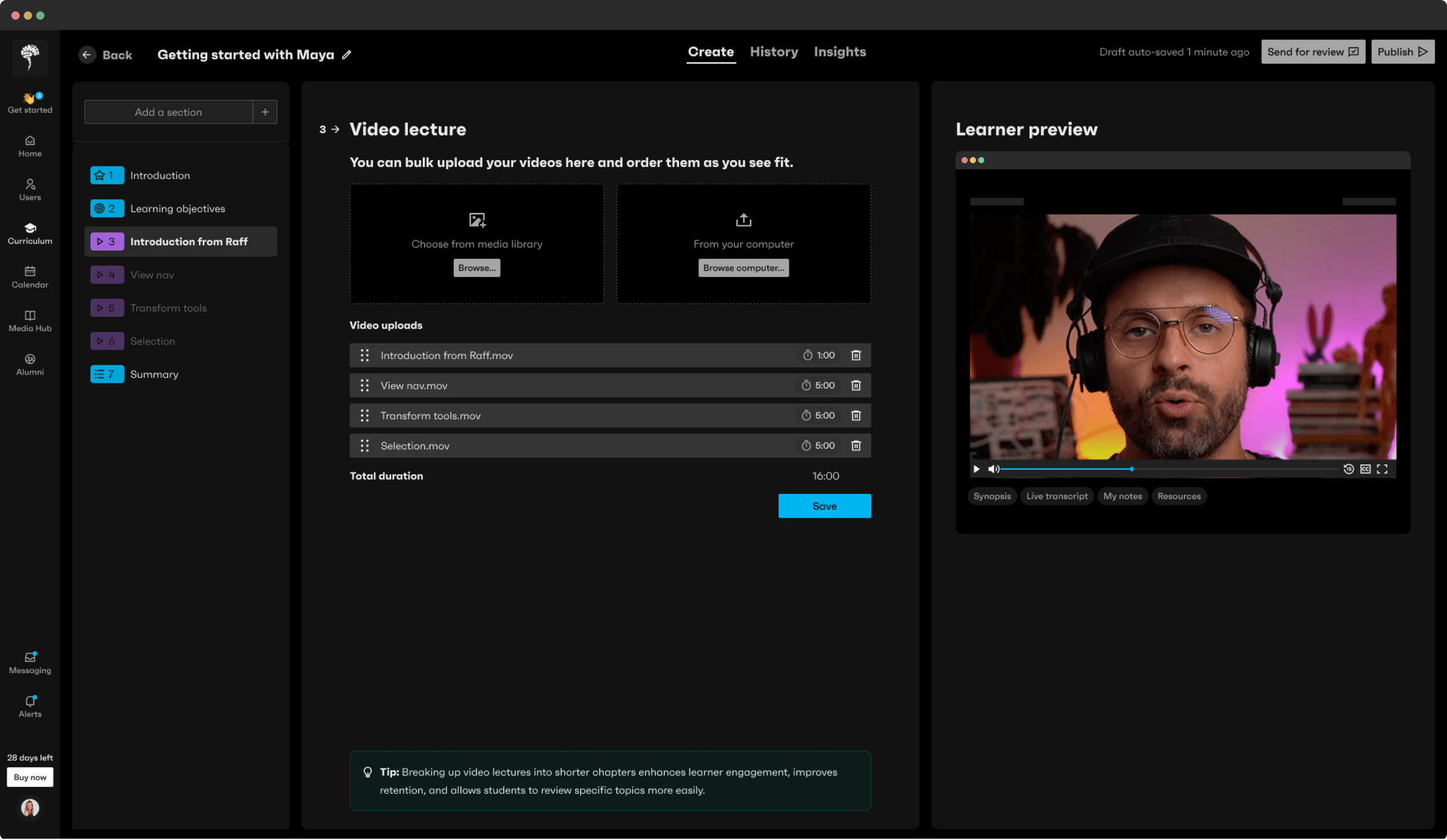
A key screen from the curriculum engine, showing modular units built into a video-lecture lesson with built-in version and approval management, connected across the lesson, course, and program taxonomy through cascading learning objectives.
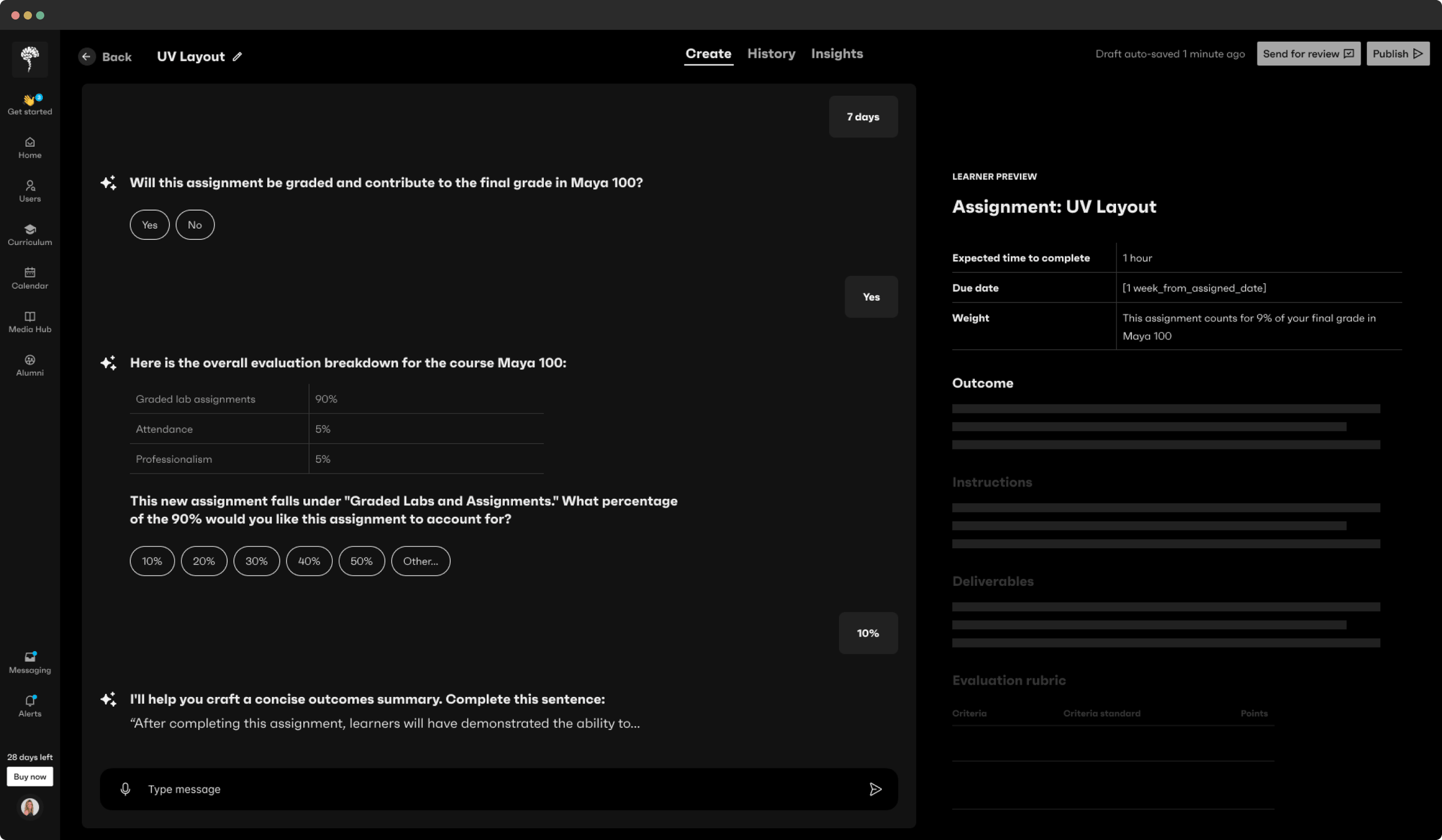
An exploration of a natural-language editor for creating assignments, part of a more complex area of the platform that connected and cascaded to the grading system and administrator-defined policies.
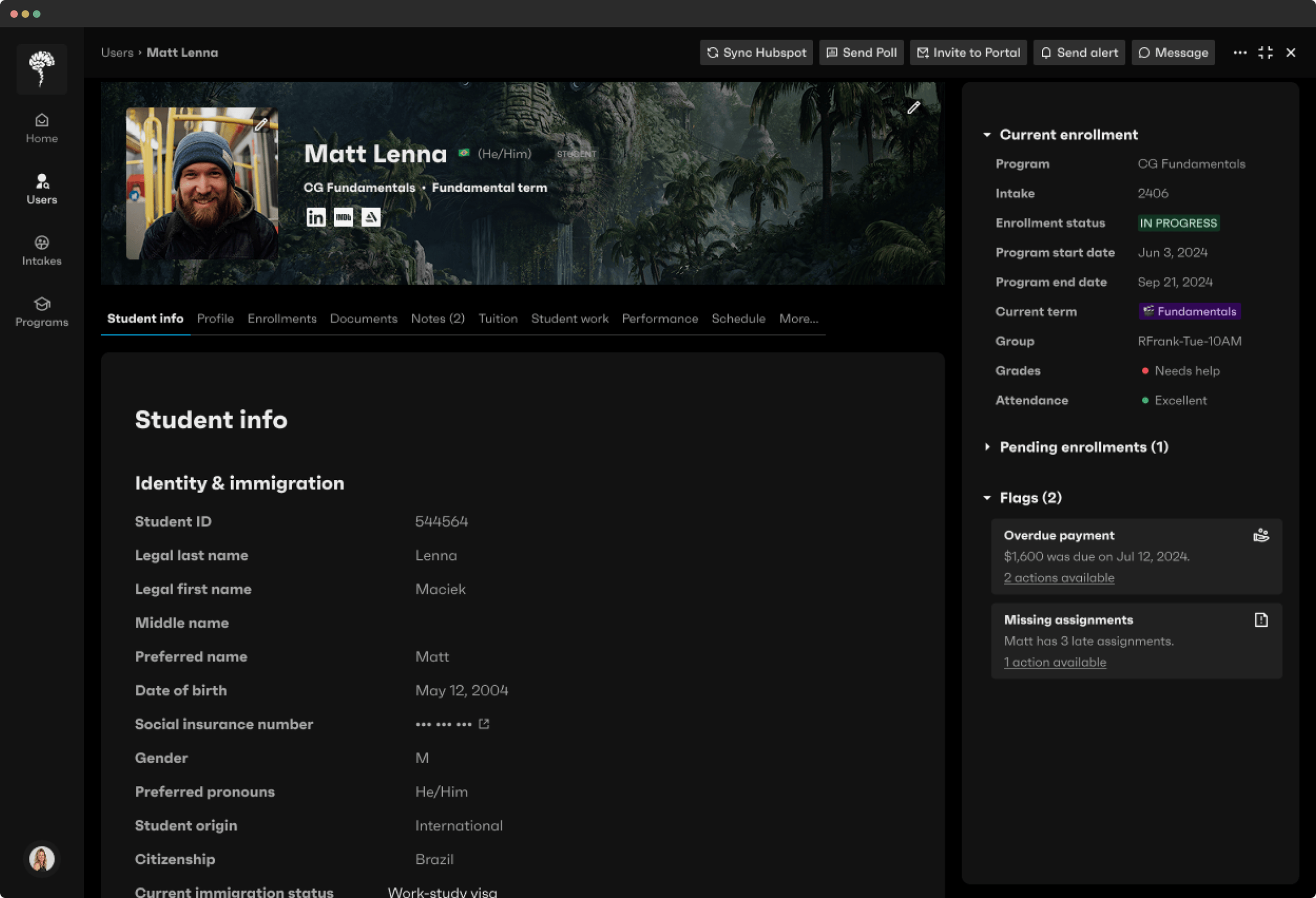
The student profile page as viewed by a super administrator. The layout was designed to adapt dynamically based on read/write permissions across user types, a core consideration in the platform's underlying permission architecture.
Next case study